By Muhammad Saqib, KP Government Innovation Fellow
When I first stepped into KP Irrigation Department's office in Khyber Pakhtunkhwa, I didn't expect to see ledgers stacked higher than a person. But there it was, piles of paper, chalkboards scribbled with land details, calculators passed around like rare treasures, and workflows that seemed frozen in time.
I learned, quickly, that this wasn't just an outdated process, it was a barrier. A barrier to transparency, to timely billing, and most importantly, to the farmers and staff who lived its consequences every day. It was the moment I understood why we needed E-Abyana.
The idea started during the early days of the KP Government Innovation Fellowship, when our team was exploring problem statements across government departments. From those initial discovery sessions and consultations with the Irrigation Department, one thing became clear: abyana (water bill) billing and collection were largely manual and fragmented. Delayed billing, inconsistent land data, and limited transparency weren't isolated problems, they were embedded in the system.
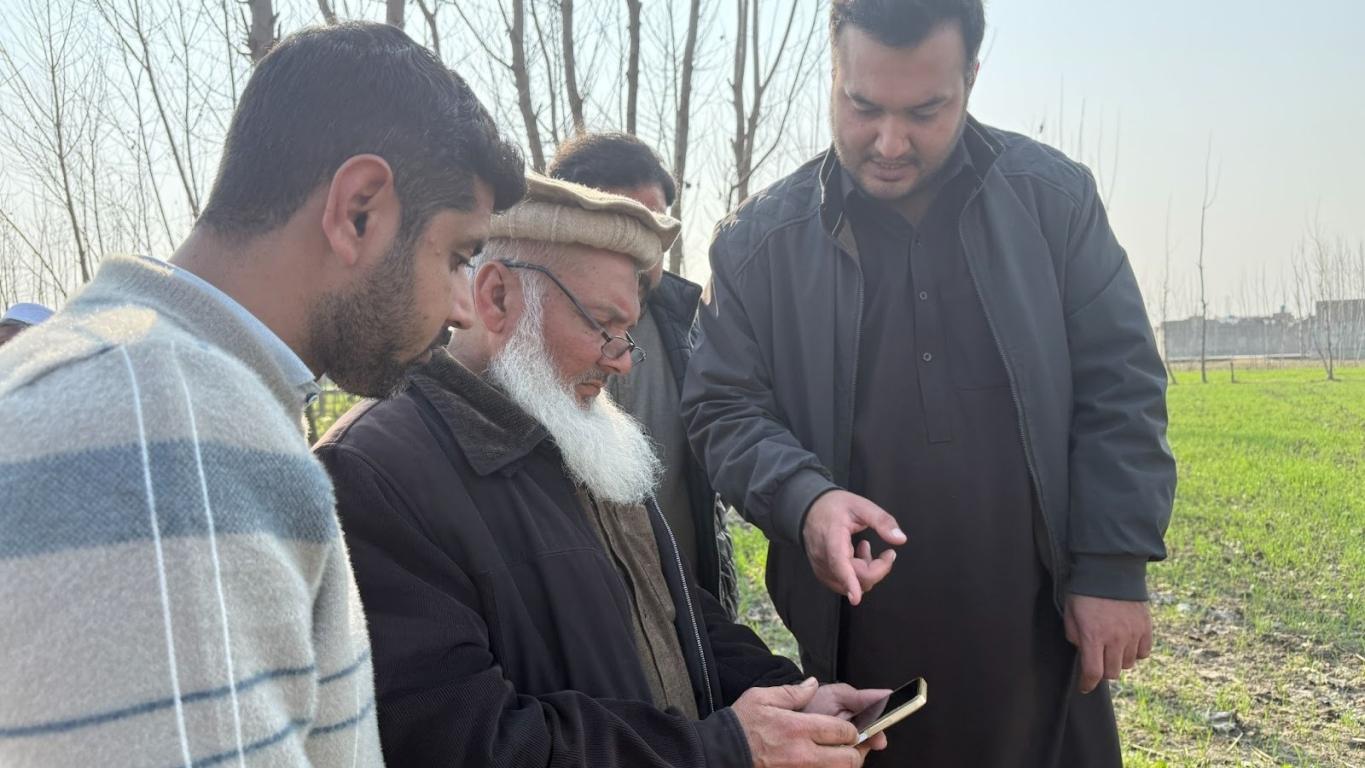
During field visits, I saw how time-consuming and error-prone the existing workflow was for both department staff and farmers. What struck me most was hearing the same frustration from different people, patwaris, zilladars, irrigation officials, all describing delays and confusion that should have been solvable long ago. That's when the need for a centralized digital solution became undeniable.
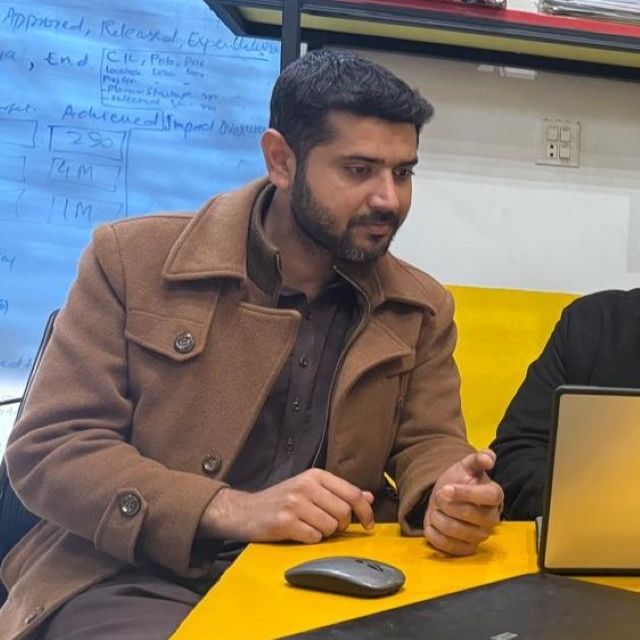

What truly shaped E-Abyana was a user-centred, co-creation approach rooted in the field. Rather than designing from assumptions, we designed alongside users. Conversations with patwaris, zilladars, and farmers during field visits helped us map real workflows, uncover hidden bottlenecks, and understand where digital tools often fail in government settings. Their feedback directly influenced everything, from form structures and language choices to approval flows and reporting dashboards. This participatory design process ensured E-Abyana reflected how work actually happens on the ground, not how it looks on paper.
We began building E-Abyana as a web- and mobile-based water billing and collection management system, tailor-made for the Irrigation Department's realities: hierarchical administrative structures, field workflows, and varying levels of digital literacy.
I worked closely with Abbas AliShah, my co-developer (and a team of other Fellows), on the project, throughout the design and development of E-Abyana. Together, we translated field insights into system features, jointly designing core modules, workflows, and role-based access structures while continuously iterating based on user and departmental feedback. This close collaboration ensured that technical decisions stayed aligned with on-ground realities and the department's operational needs.
Working with government stakeholders was transformative. Frequent field visits and meetings with the AD-IT (Mr. Maaz Ghaznavi), patwaris, zilladars, XENs, and other officials didn't just inform design, they shaped it. I saw how land records, water distribution, and revenue collection worked on the ground, and that grounded insight became the backbone of E-Abyana.
From a technical perspective, the project taught me how to design and scale a complex, role-based system. Turning real-world administrative hierarchies, divisions, districts, tehsils, halqas, villages, and water outlets, into a functional digital architecture was challenging, but deeply instructive. Developing modules for land survey, irrigator management, billing, arrears, and dynamic reporting strengthened my skills in backend development, database design, and workflow automation using Laravel.
But the most important lesson was not technical. It was learning to prioritize people over code. Since many government users had limited digital experience, simplicity, clarity, and usability became paramount. We adopted user-centric and agile development practices, continually iterating based on feedback. This flexibility, balancing technical feasibility with real user needs, was the difference between building a system and building a system people actually want to use.
Another milestone was integrating digital payment mechanisms like PSID and 1LINK, enabling payments through banks, Easypaisa, and JazzCash. This gave me first-hand experience with secure payment flows, financial reconciliation, and the importance of transparency and traceability in public sector revenue systems.
Beyond development, we focused on adoption. Our team traveled across all divisions of Khyber Pakhtunkhwa to conduct hands-on training sessions for Irrigation Department employees, ensuring they could confidently use and manage the system. These sessions sharpened my communication skills and underscored how vital user ownership is for long-term sustainability.
This Fellowship also strengthened my communication, teamwork, and problem-solving abilities. Unclear requirements, field constraints, and operational limitations tested us, but with guidance from KPITB and Code for Pakistan, we navigated these obstacles together.
Today, E-Abyana is officially launched and actively running in all divisions of Khyber Pakhtunkhwa, a major milestone marked by its inauguration with the Chief Minister, Mr. Sohail Khan Afridi. This launch was more than a ceremony; it was proof of real-world impact, strong government ownership, and what civic technology can achieve when it's built with users, not for them.
E-Abyana would not have been possible without the ownership, trust, and active involvement of the Khyber Pakhtunkhwa Irrigation Department. The department's openness to change and willingness to engage throughout discovery, development, and rollout were instrumental in turning an idea into a functioning provincial system.
In particular, the leadership and continuous support of Mr. Maaz Ghaznavi, Assistant Director IT, Irrigation Department KP, played a pivotal role. From shaping the system vision to navigating institutional realities and enabling cross-department coordination, his stewardship ensured the project moved forward with clarity and purpose.
We are also deeply grateful for the on-ground support and insights provided by Mr. Badar Khan, Deputy Collector, Mardan Irrigation Division, Mr Ebad Khan Field Officer Mardan, Mr. Engr. Syed Ahmad Amin Shah, Executive Engineer (XEN), Irrigation Department, Mardan. Their practical feedback during field visits, pilot testing, and training helped align the system with operational realities and reinforced strong departmental ownership.
E-Abyana's journey has reaffirmed something I already believed: technology can be a powerful enabler of better governance, transparency, and citizen service. But only when it's grounded in the lived realities of the people it's meant to serve.
Footnote:
E-Abyana was developed in collaboration with the Khyber Pakhtunkhwa Irrigation Department, under the 8th Cycle (2024–2025) of the KP Government Innovation Fellowship Program. The project was implemented in close coordination with Mr. Maaz Ghaznavi (AD IT), the department's focal person.
Fellows who contributed include Muhammad Saqib, Abbas Ali Shah, Muhammad Zahid, Muhammad Fahad, Mahnoor Khan, and Asif Ali Khan. The KP Fellowship team from Code for Pakistan included Ibraheem Saleem, Shahzeb Siddiq, Munnawar Shah, and Karishma Zaka Ullah, with technical supervision from Ali Raza and Shaji Ahmed. The KPITB team included Shakir Ullah Khan, Sohail Khan, and Zahid Nawaz.
The fellowship is a collaborative initiative between Code for Pakistan and KPITB, implemented through Durshal's Government Innovation Lab to co-create civic technology solutions with government departments.